
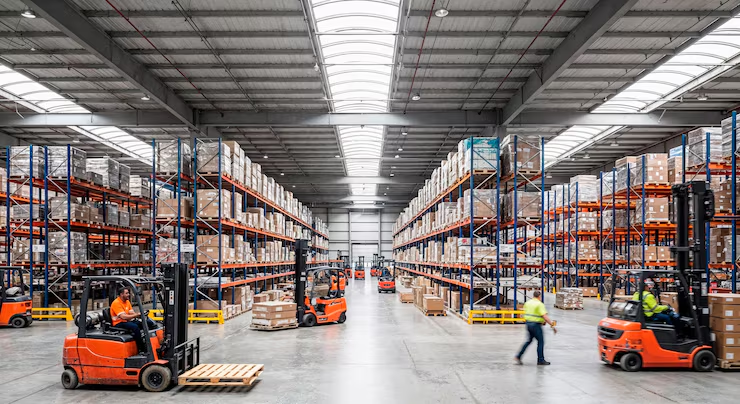
Warehousing today is more competitive than ever. To meet increasing order demands and operational speed, efficiency must improve continuously. One solution that has quickly become essential in modern logistics is the automated 升降台. These advanced lifting platforms are designed not only to enhance worker safety but also to significantly boost warehouse throughput.
This article explains how automated lifting platforms transform warehouse performance and why they are a smart investment for any distribution or fulfillment center.
1. Faster Material Handling and Movement
Automated lifting platforms streamline the movement of inventory between different heights, whether transferring goods from ground level to shelving systems or loading vehicles at the dock. Employees no longer need manual handling tools, which reduces loading times and accelerates daily operations.
The result is faster order processing, especially in high-volume environments.
2. Reduced Manual Labor and Worker Fatigue
Warehouse staff perform repetitive activities involving lifting, bending, and reaching. These actions cause fatigue, slow down productivity, and increase the risk of musculoskeletal injuries. An 升降台 helps automate these repetitive height-adjustment tasks, allowing workers to maintain better ergonomics.
Less physical strain means employees remain productive throughout the shift, improving workflow efficiency.
3. Improved Inventory Accessibility
Storage strategies often involve vertical space to maximize capacity. Automated lifting platforms make accessing high shelves easy and safe. Workers can retrieve and store goods without ladders or unsafe climbing.
This ensures:
- Faster picking
- Fewer damaged products
- Better stock rotation efficiency
Inventory accuracy improves as a result.
4. Enhanced Loading Dock Efficiency
Processing goods in and out is a critical factor in warehouse. Automated lifting platforms at the dock can:
- Level height differences between trucks and floors
- Speed up pallet movements
- Reduce bottlenecks during peak hours
This is especially beneficial for 24/7 operations where every minute counts.
5. Integration With Warehouse Automation Systems
Automated 升降台 technology is compatible with:
- Conveyor systems
- AGVs (Automated Guided Vehicles)
- Warehouse Management Systems (WMS)
This creates a seamless internal logistics flow, optimizing every step from receiving to dispatch.
6. Fewer Safety Incidents
Automation reduces human error. Lifting equipment with smart controls and safety features helps prevent accidents including:
- Falls
- Dropped goods
- Crushed-hand injuries
Employees can operate the system confidently, and the workplace becomes safer overall.
Conclusion
Warehouse throughput relies on speed, precision, and worker safety. Automated lifting platforms enhance all three. By incorporating an 升降台, warehouses achieve smoother operations, faster processing, and higher productivity. As warehouse automation continues to advance, automated lifting platforms will be crucial in staying competitive and meeting modern logistics demands.