In the high-stakes world of South Korean athletics—from the baseball diamond and soccer pitch to the dazzling stages of K-Pop—performance is paramount. But equally crucial is recovery. While athletes worldwide rely on ice baths and foam rollers, South Korea has integrated a more ancient, powerful, and holistic tool into its recovery protocols: traditional Korean massage.
Far more than a simple spa treatment, Korean massage is a strategic, medical-grade therapy used by professional sports teams, Olympic athletes, and performers to accelerate healing, prevent injury, and extend their careers. It’s a secret weapon rooted in centuries-old wisdom, now supercharged by modern sports science.visit for more details 마사지
The Athletic Philosophy: Treating the Body as an Energetic System
Western sports recovery often focuses on the muscular and skeletal systems. Korean massage, rooted in traditional Eastern medicine, takes a more comprehensive view. It treats the athlete’s body as an integrated system of energy (Ki), blood, and fluids.
For an athlete, a strenuous workout or competition doesn’t just cause muscle tears; it creates stagnation. Ki and blood become blocked, metabolic waste like lactic acid pools, and the body’s natural balance is thrown off. Pain, stiffness, and fatigue are the results.
Korean massage therapy aims to do three things:
- Purge Stagnation (Eohyeol – 어혈): Actively clear out metabolic waste and old, congealed blood.
- Promote Circulation (Bohwal – 활): Drive fresh, oxygenated blood to the fatigued muscles and tissues.
- Rebalance Energy (Gi-gyeong – 기경): Restore the smooth flow of Ki to ensure the body’s systems are communicating and functioning optimally.
This philosophy makes it uniquely effective for the specific demands of athletic recovery.
Key Korean Massage Techniques and Their Athletic Benefits
A therapist working with an athlete will deploy a range of targeted techniques, often in a single session, to address different recovery needs.
1. Deep Tissue Acupressure (Jiap – 지압) for Targeted Release
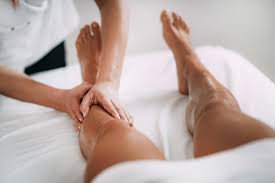
This is the cornerstone of Korean sports massage. Therapists use deep, sustained pressure with their thumbs, palms, and elbows on specific acupressure points and along muscle bellies.
- How it Helps Athletes:
- Breaks Down Adhesions: Intense training creates micro-tears and scar tissue (adhesions) within the muscle. Jiap physically breaks these down, restoring proper muscle fiber alignment and function.
- Reduces Delayed Onset Muscle Soreness (DOMS): By flushing out the lactic acid and other metabolic waste that cause soreness, it dramatically shortens recovery time between training sessions or games.
- Relieves Nerve Compression: Tight muscles can pinch nerves, leading to pain, tingling, or weakness (e.g., sciatica). Releasing this pressure restores proper nerve function.
2. Cupping (Buhang – 부항) and Gua Sha for Deep Detoxification
The iconic circular marks seen on athletes like Michael Phelps are from cupping, a therapy widely used in Korean sports medicine.
- How it Helps Athletes:
- Powerful Suction for Stagnation: Cupping creates a vacuum on the skin, pulling stagnant blood and metabolic waste from deep within the muscle tissue to the surface. This “purging” effect is unparalleled for relieving deep, chronic tightness.
- Reduces Inflammation: The rush of blood to the area (the therapeutic “bruise”) triggers the body’s anti-inflammatory response, accelerating healing.
- Gua Sha (Scraping): This related technique uses a smooth-edged tool to scrape the skin, breaking up fascial restrictions and promoting circulation. It’s exceptionally effective for treating IT band syndrome, shin splints, and plantar fasciitis.
3. Assisted Stretching (Jeng-kyung – 정경) for Flexibility and Injury Prevention
A Korean massage session is highly dynamic. The therapist doesn’t just work on a static body; they move it.
- How it Helps Athletes:
- Increases Range of Motion: By passively taking the athlete’s joints through their full range of motion, it lengthens muscle fibers and joint capsules, improving flexibility far more effectively than static stretching alone.
- Re-calibrates the Body: After a competition, an athlete’s body can be “out of whack.” Assisted stretching helps realign the musculoskeletal system, correcting imbalances that could lead to future injuries.
- Improves Neuromuscular Connection: This dynamic work helps “remind” the brain and muscles how to work together efficiently, enhancing coordination and performance.
4. The “Devil’s” Massage (Akma Massage – 악마 마사지) for a Full-System Reset
For deep, chronic issues or as part of a post-season recovery, some athletes undergo an Akma (devil) massage. It’s intense, often painful, and incredibly effective.
- How it Helps Athletes:
- Total Body Reboot: Using hands, elbows, knees, and even feet, the therapist systematically releases every major muscle group. This is a complete system reset, clearing out systemic stagnation and resetting the body’s baseline.
- Breaks Up Old Scar Tissue: It’s one of the few therapies capable of breaking down years of accumulated scar tissue from old injuries, restoring lost mobility and function.
The Korean Advantage: Integration and Accessibility
What makes Korean massage so effective in South Korea is not just the techniques, but how they are integrated into the athletic culture.
- Team Integration: Professional baseball and soccer teams often have on-staff traditional Korean medicine therapists who work alongside physiotherapists and trainers. Recovery plans are a blend of modern science and ancient wisdom.
- The K-Pop Standard: K-Pop idols are elite performers who endure extreme physical demands. Their rigorous schedules include regular, intensive massage sessions to maintain the flexibility and stamina required for their choreography and prevent injury.
- Accessibility for All: From the elite to the amateur, recovery is accessible. The local Jjimjilbang (bathhouse) is a hub where aspiring athletes can go for affordable Akma massages and body scrubs, making these powerful recovery tools part of the national wellness consciousness.
Conclusion
In South Korea, massage is not a luxury; it is a fundamental pillar of athletic performance and longevity. By treating the athlete as a complete energetic system and using a powerful combination of acupressure, cupping, and dynamic stretching, Korean massage does more than just soothe sore muscles. It actively purges stagnation, accelerates tissue repair, and re-balances the body for peak performance. It is a time-tested, highly effective strategy that gives South Korean athletes a powerful edge in the relentless pursuit of excellence.